


Opening a restaurant means making hundreds of decisions before the first guest walks in. One that's easy to underestimate — and expensive to get wrong — is your commercial dinnerware and cookware. The wrong choice means chipped plates after two months, cookware that can't handle the volume, and a tabletop presentation that undercuts the brand you worked hard to build.
Here's what you need to know to get it right from day one.
Start With Your Concept, Not a Catalog
Your dinnerware is an extension of your restaurant's identity. Before browsing products, answer three questions:
-
What's the cuisine and price point? A fast-casual spot and a fine-dining steakhouse have completely different tabletop needs.
-
What's your service style? Table service, family-style, buffet, and counter service each call for different product types and quantities.
-
What's the visual aesthetic? Rustic and artisanal? Sleek and modern? Your dinnerware should reinforce that — not fight it.
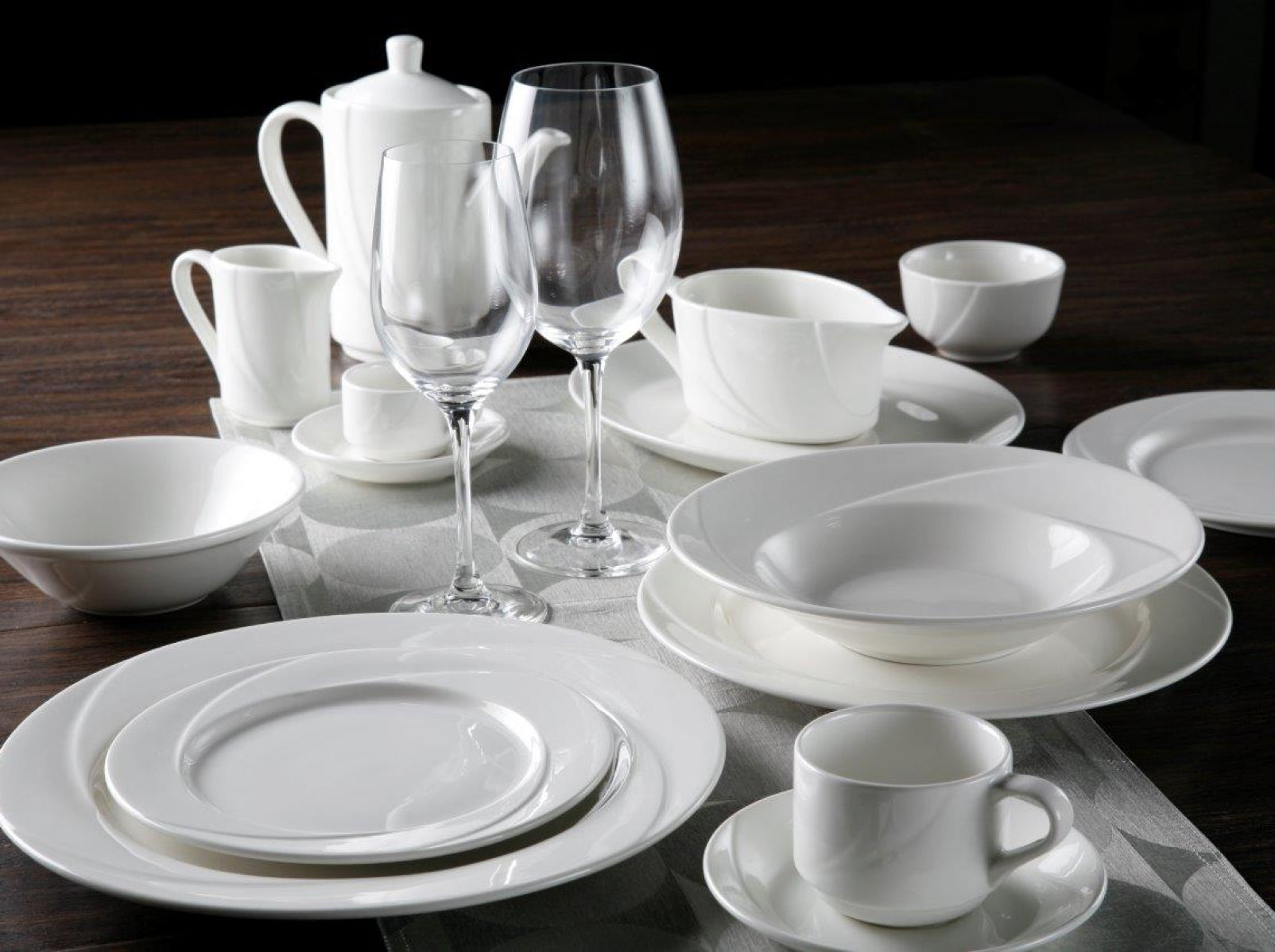
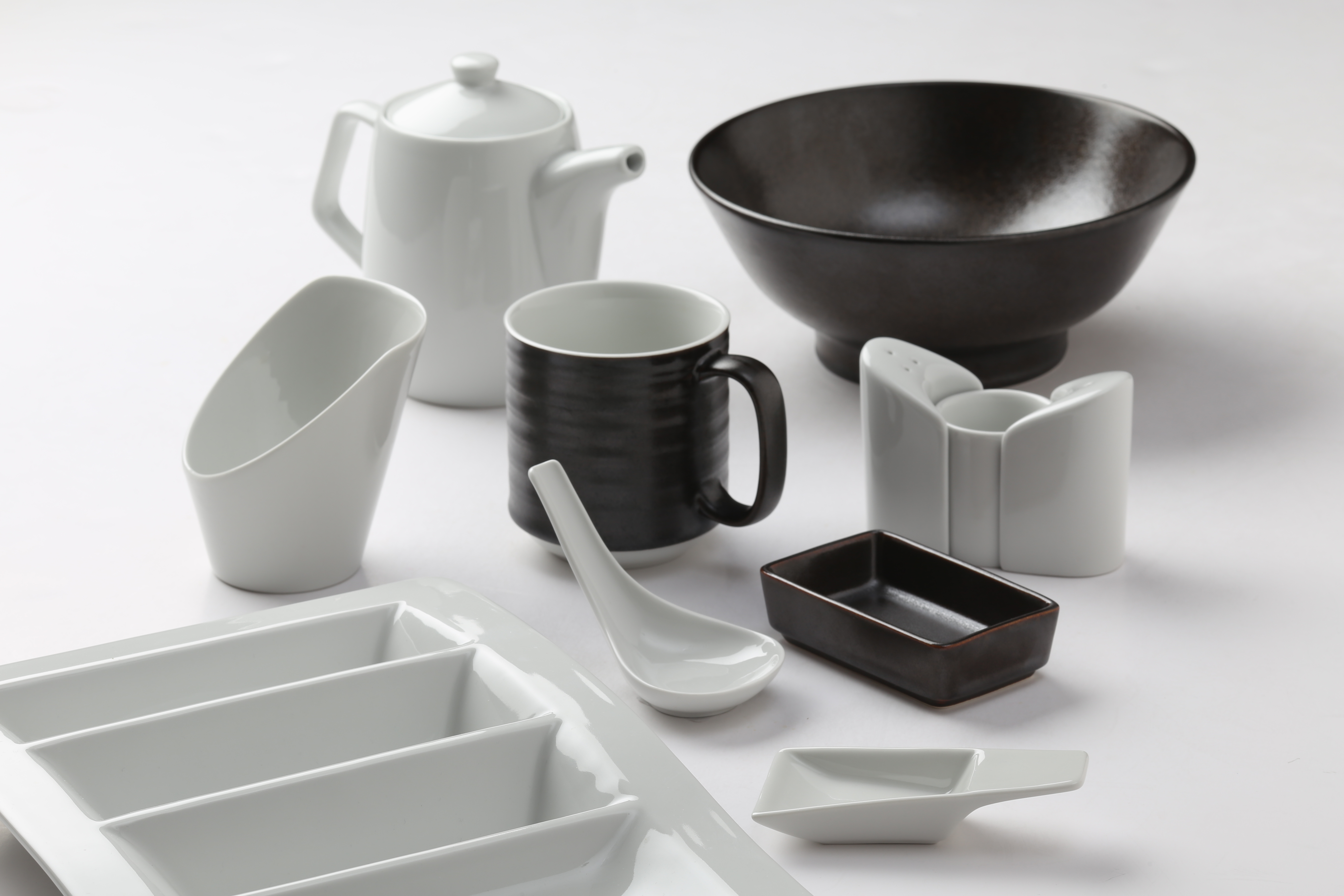
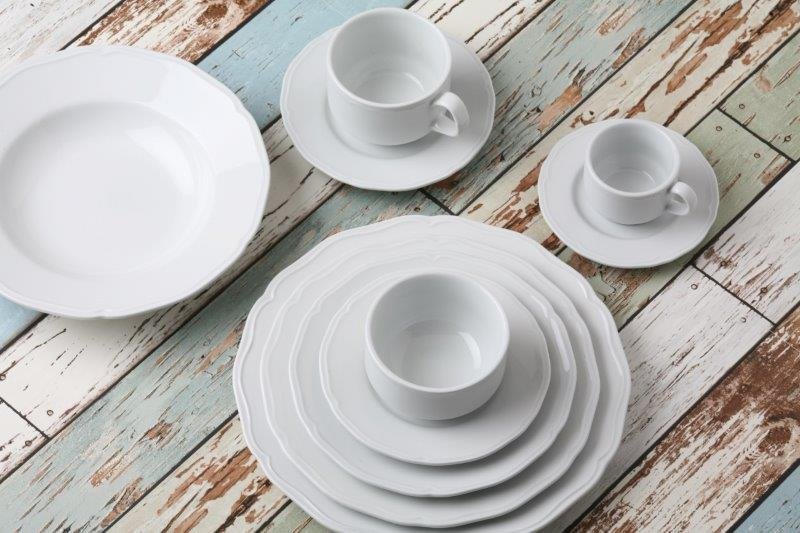
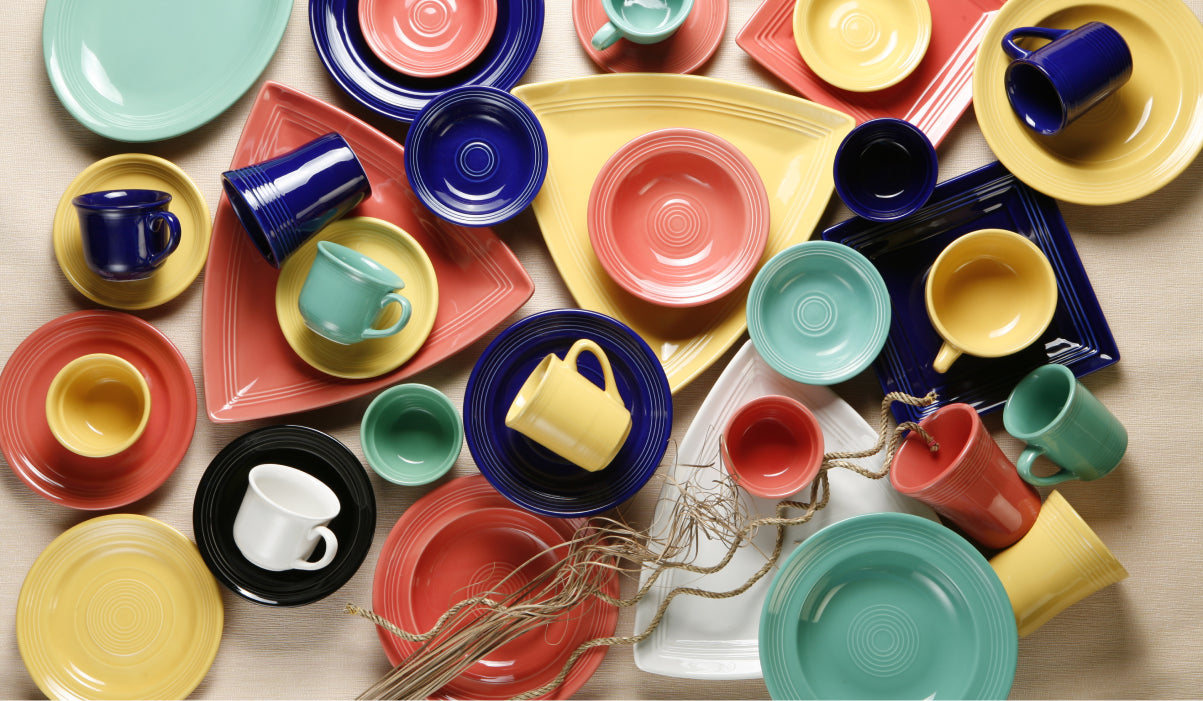
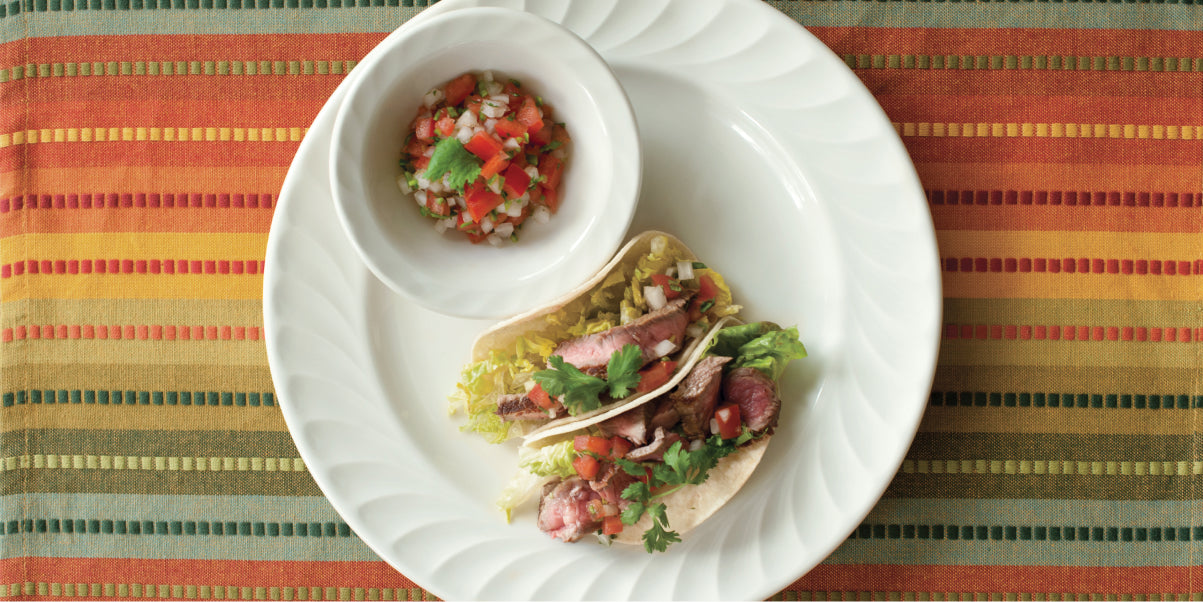
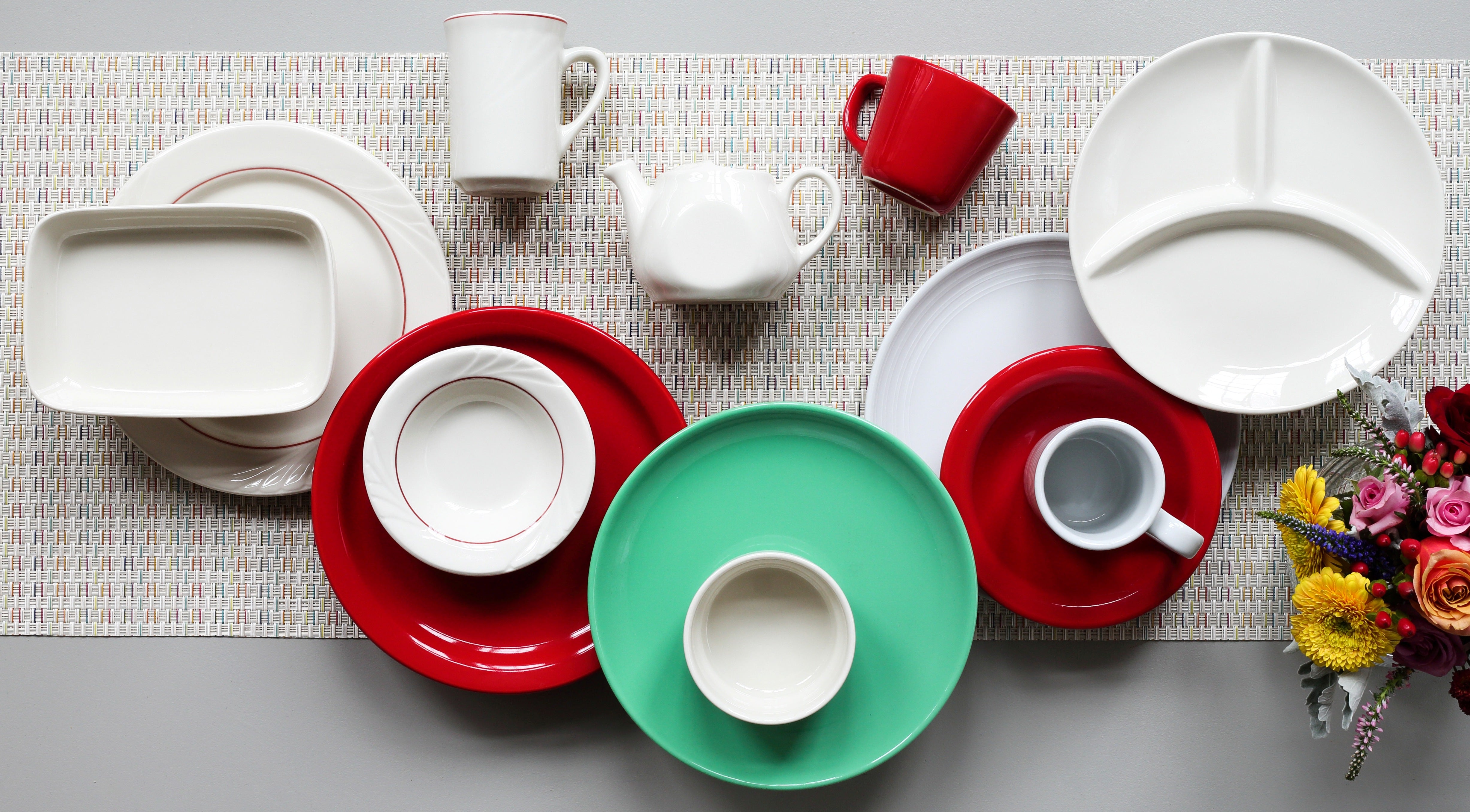
For example, Tuxton's TuxTrendz Artisan collection suits a farm-to-table or brunch concept with its handcrafted textures and organic colorways. The Forge and Kona lines work beautifully in craft beer halls and upscale casual bars. And classic Pearl White collections like Modena and San Marino let the food speak for itself in fine dining environments.
Quick tip: Pull up your interior design moodboard when shopping for dinnerware. They should look like they belong together.
The Core Products Every Restaurant Needs
Most new operators need to build out across several categories. Here's the essential list:
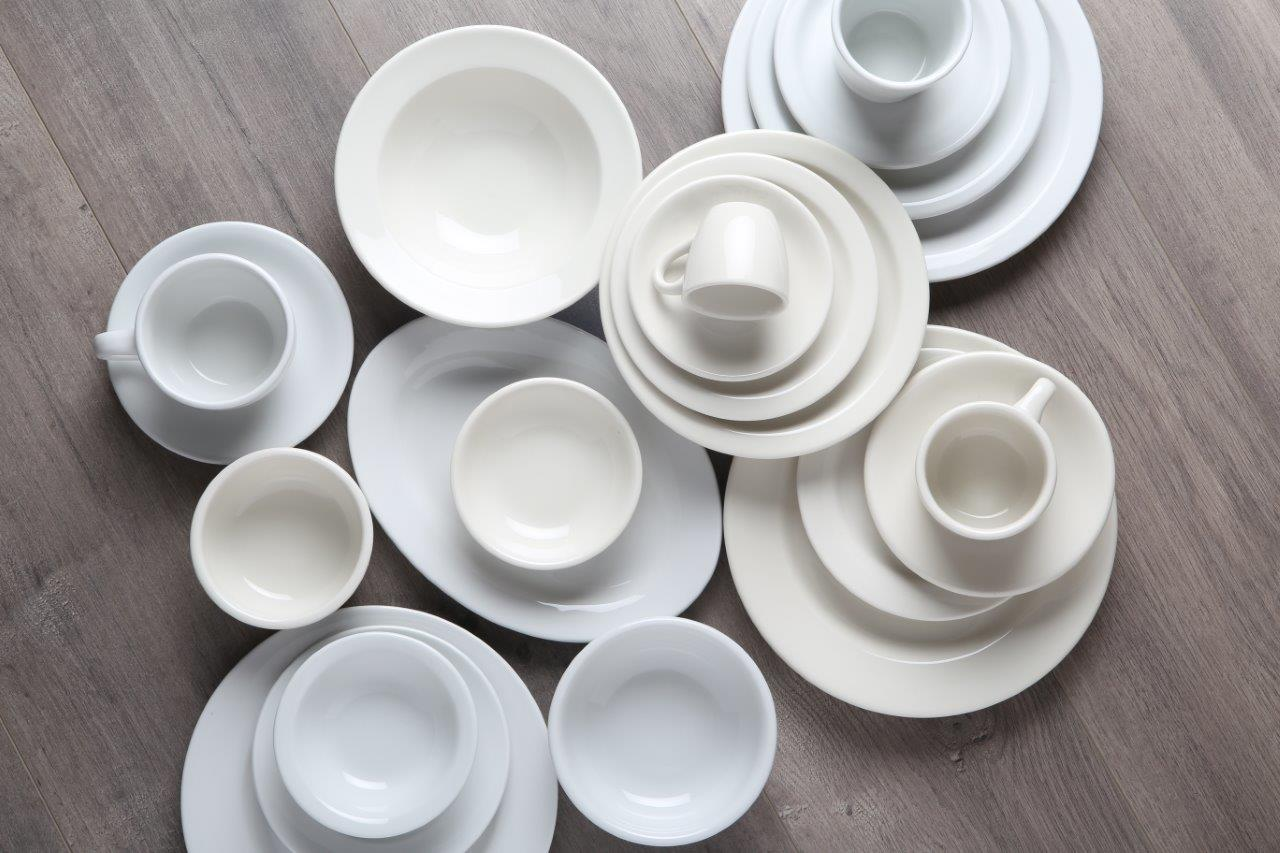
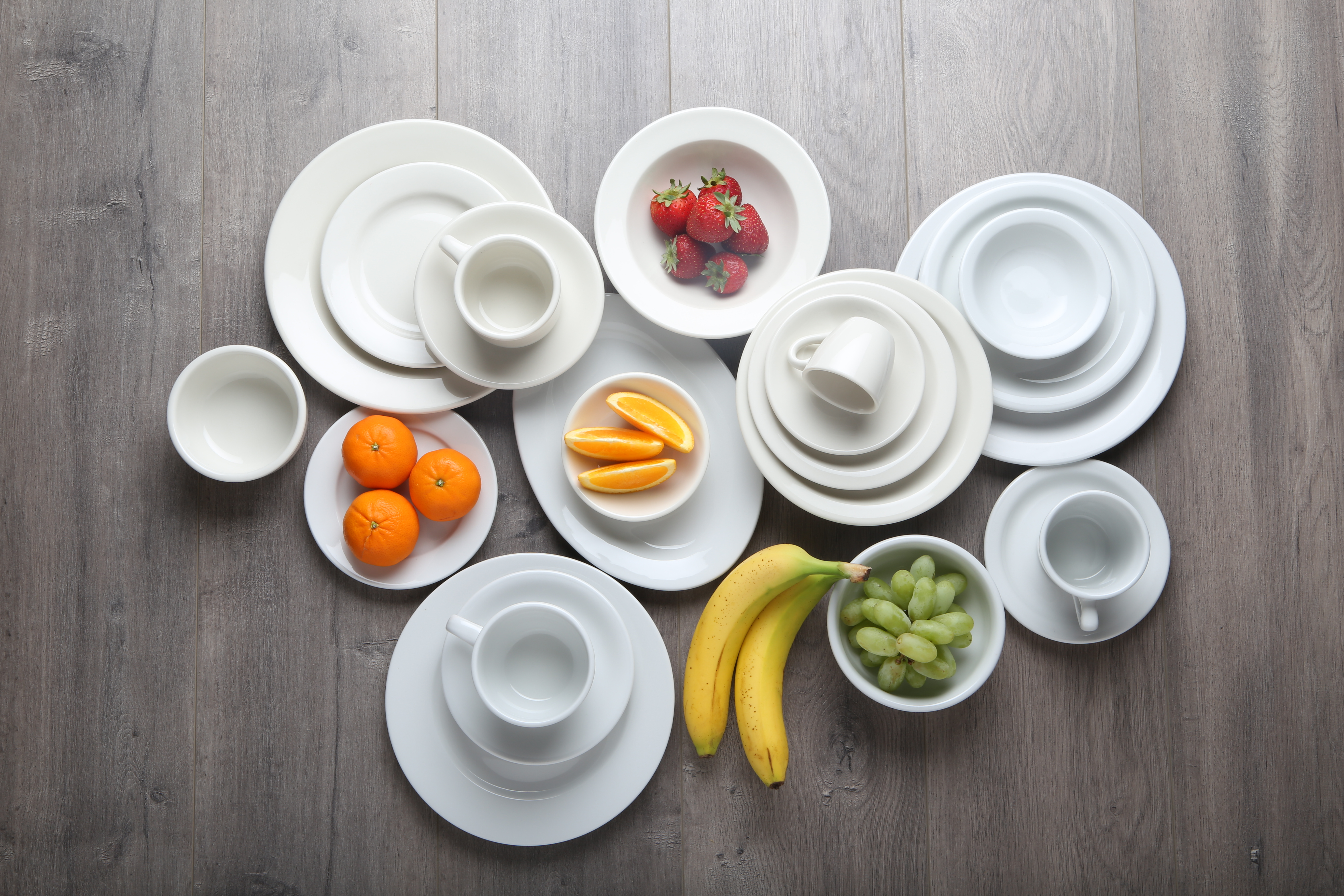
Plates: Plan for dinner plates (10"–11"), salad/appetizer plates (7"–9"), and bread plates (6"–7").
One thing to consider before you buy: what type of commercial dishwasher will you be running? High-temperature machines sanitize via heat — your plates need to withstand repeated thermal stress without cracking or glazing. Low-temperature machines sanitize via chemicals — your dinnerware needs to resist the wear and tear of prolonged chemical exposure. Vitrified china handles both, but it's worth confirming specs with your supplier before finalizing your order.
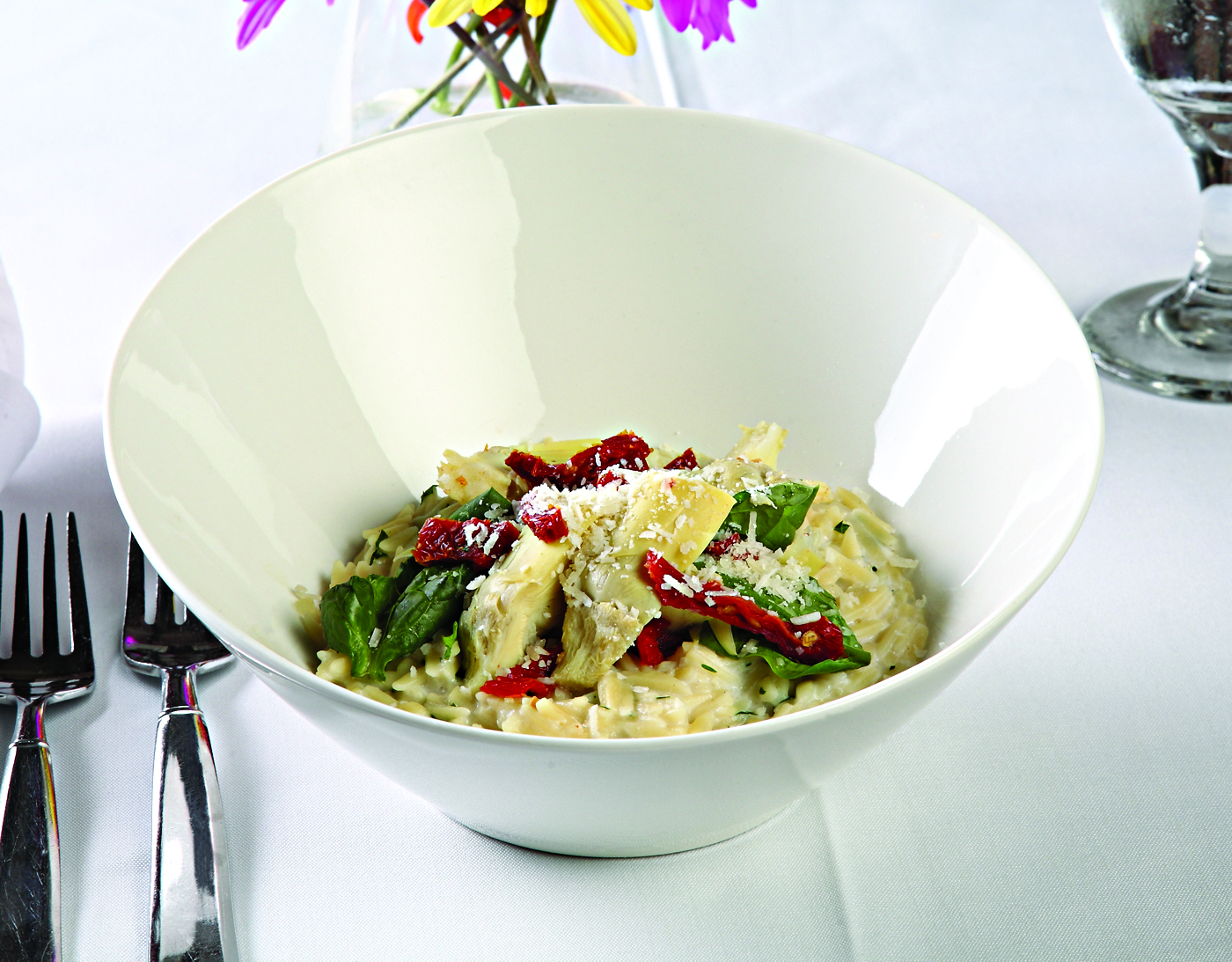
Bowls: Bowls pull double duty across soups, salads, pasta, and desserts. Tuxton's lineup includes nappie bowls, coupe bowls, rimmed pasta bowls, and grapefruit bowls to cover every menu need.
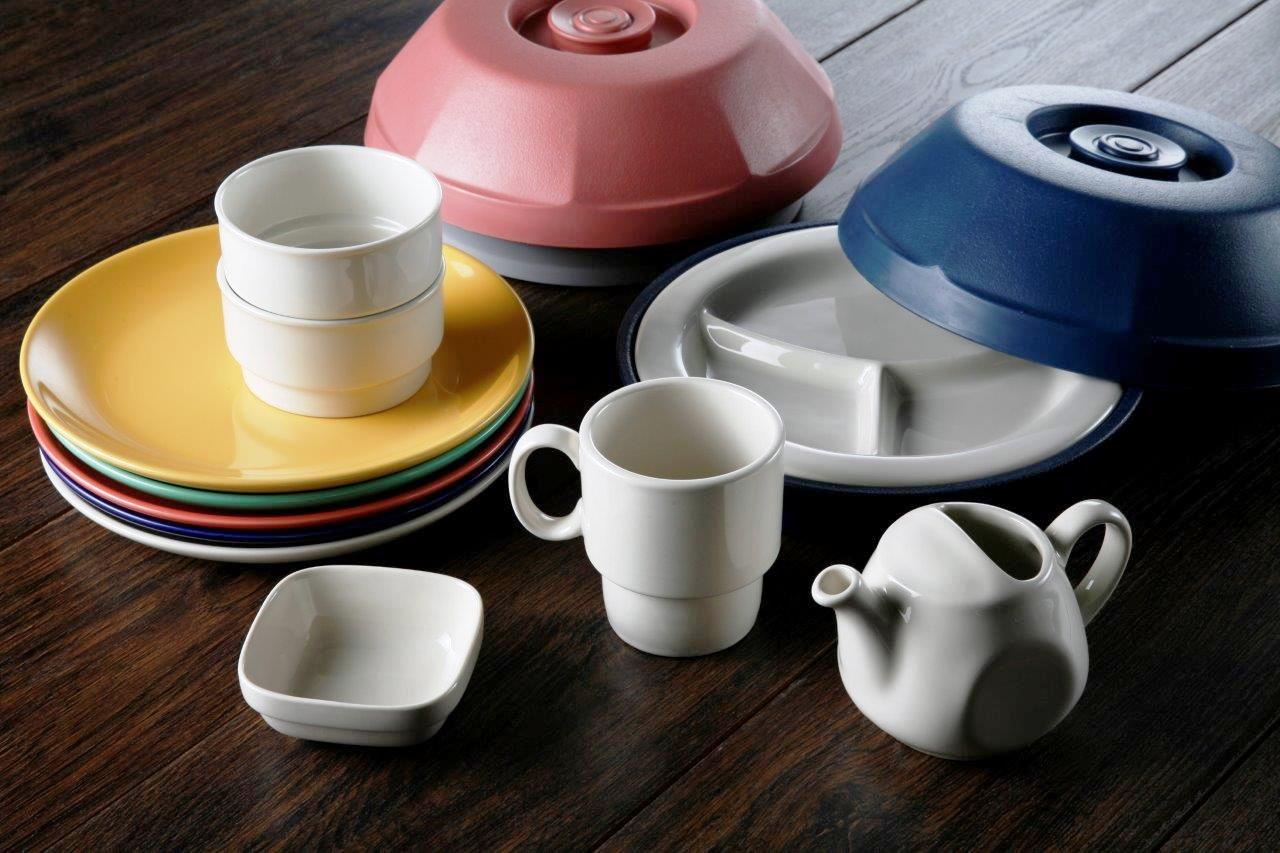
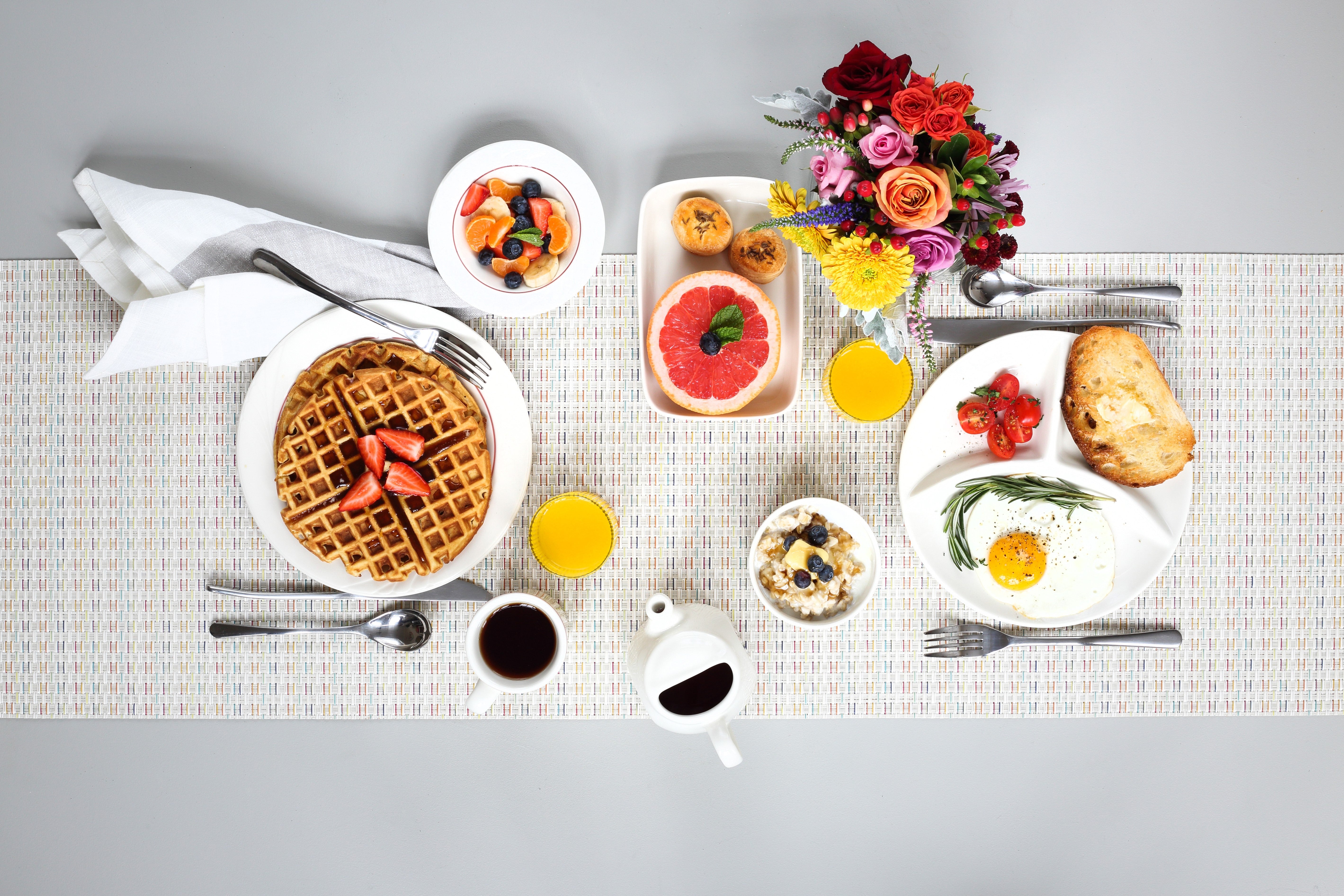
Mugs & Coffee Service: If you're doing breakfast, brunch, or full coffee service, the right mug holds heat longer and stacks cleanly for back-of-house efficiency. Tuxton's Yukon mug line is a workhorse in this category.
Serving Platters & Ramekins: Often overlooked by first-time operators. Platters are essential for family-style service and catering. Ramekins and sauce cups elevate sauce presentations and small-format plating — and add a polished, professional touch guests notice.
How many do you need? A reliable rule of thumb for full-service restaurants:
-
Dinner plates: 3× your total seat count
-
Salad plates: 2.5× seat count
-
Bowls: 2× seat count
-
Mugs/cups: 2× seat count (more for heavy coffee service)
The buffer accounts for plates in the dishwasher cycle, plates staged for the next turn, and inevitable breakage.
Commercial Cookware: What Actually Matters
Your front-of-house gets the attention, but your back-of-house cookware is what makes the food happen. Here's what to prioritize:
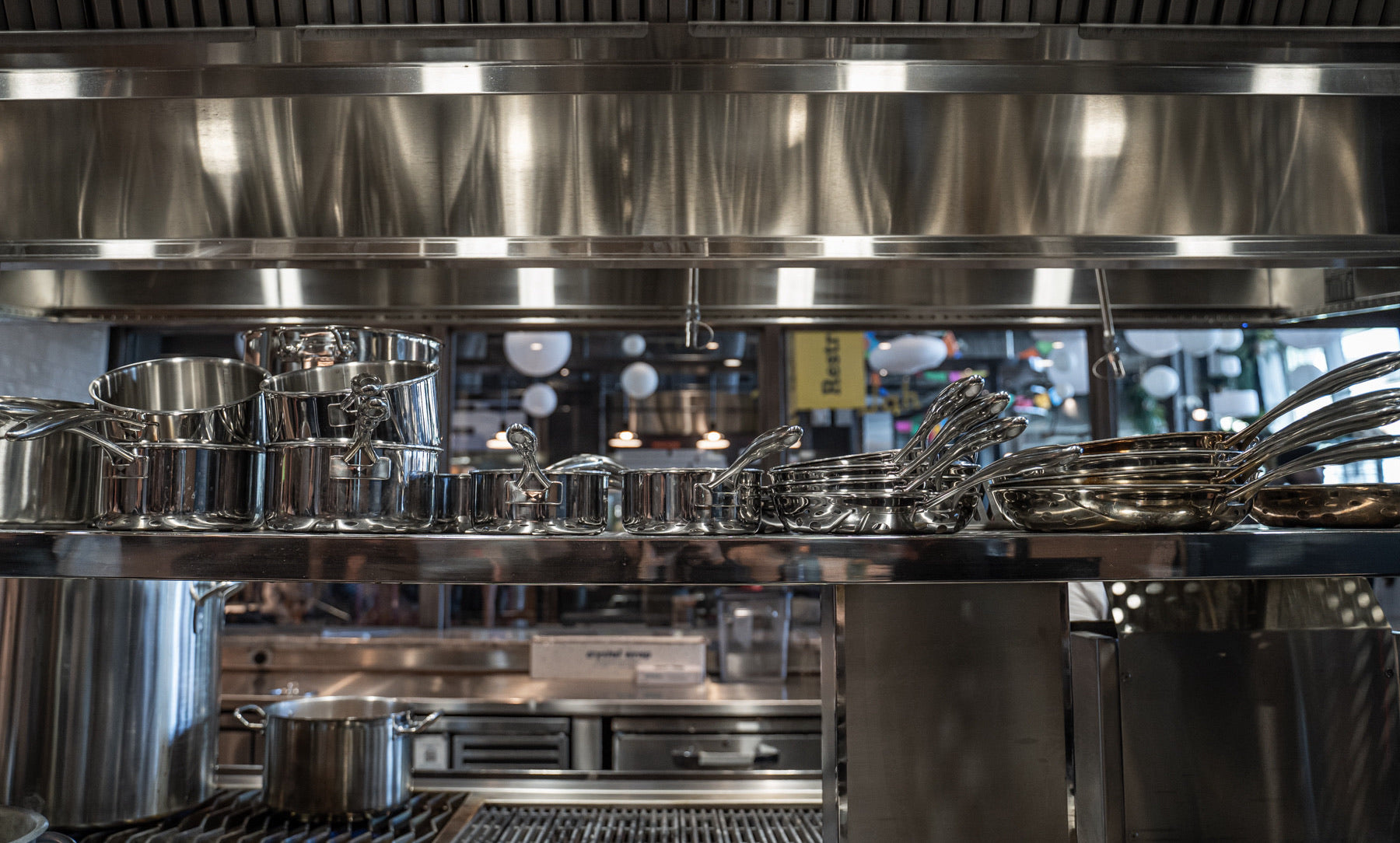
NSF Certification: NSF International certification means your cookware has been independently tested against commercial food safety standards — and it's required or strongly recommended by most local health departments. Tuxton Pro Cookware is fully NSF certified and manufactured without toxic chemicals, including PFAS-free options.
Heat Distribution & Surface Compatibility: Consistent, even heat is non-negotiable in a commercial kitchen. Look for tri-ply or aluminum-clad construction, and confirm compatibility with your range type — especially induction, which is increasingly common for safety and energy efficiency. Tuxton's TuxCLAD and TuxSTEEL lines are built for multi-surface use and efficient heat transfer, so you get consistent results at lower heat settings.
Versatility: The best commercial cookware handles multiple tasks. Prioritize sauté pans, stockpots, Dutch ovens, and specialty pans based on your menu.
The Real Cost of Buying Cheap
It's tempting to cut corners on dinnerware when cash is tight before opening. But the numbers rarely favor it:
|
Budget Consumer Ware |
Commercial Dinnerware (e.g., Tuxton) |
|
|
Lifespan |
6–12 months |
3–5+ years |
|
Chip resistance |
Low |
High (vitrified china) |
|
Dishwasher cycles |
Limited |
Unlimited |
|
Long-term cost |
High (constant replacement) |
Low |
For any restaurant running more than a handful of covers a day, commercial-grade products are the economical choice — full stop.
What to Look For in a Supplier
When sourcing your tabletop program, you're entering a relationship, not just making a purchase. Look for:
-
Real-time stock availability — you can't wait weeks for plates when opening day is around the corner
-
Consistent reorder availability — if a plate becomes your signature, you need to reorder it in two years
-
Foodservice expertise — partners who understand high-volume kitchen demands, not just retail aesthetics
Tuxton has served independent restaurants, boutique hotels, multi-unit chains, and healthcare facilities since 1999 — and is a proud official purveyor of cookware at the James Beard Foundation's Platform in NYC.
Frequently Asked Questions
What type of dinnerware is best for restaurants? Vitrified china is the industry standard for full-service restaurants. It's denser, more chip-resistant, and more sanitary than standard ceramics — and can handle relentless commercial dishwasher cycles.
How much commercial dinnerware do I need when opening a restaurant? A good starting point is 3× your seat count for dinner plates, and 2–2.5× for bowls and salad plates. Always buy a buffer to account for dishwasher cycles, table turns, and breakage.
Is NSF-certified cookware required for restaurants? NSF certification is required or strongly recommended by most local health departments for commercial food equipment. Always verify your local code before opening.
Can I mix different dinnerware styles in my restaurant? Yes — intentionally. Many operators pair a core collection with specialty pieces (like a textured Artisan bowl for a signature dish). The key is making it feel curated, not mismatched.
Ready to Build Your Tabletop Program?
Whether you're opening your first restaurant or scaling an existing concept, getting your dinnerware and cookware right sets the foundation for your plating, your brand, and your bottom line.
Explore Tuxton's full collection → 📞 909.595.2510 | 📧 Info@tuxton.com | Check Real-Time Stock
